Stable Ground or Shifting Sand? A Practical Investor's Guide to USD-Backed Tokens in an Era of US Regulatory Scrutiny
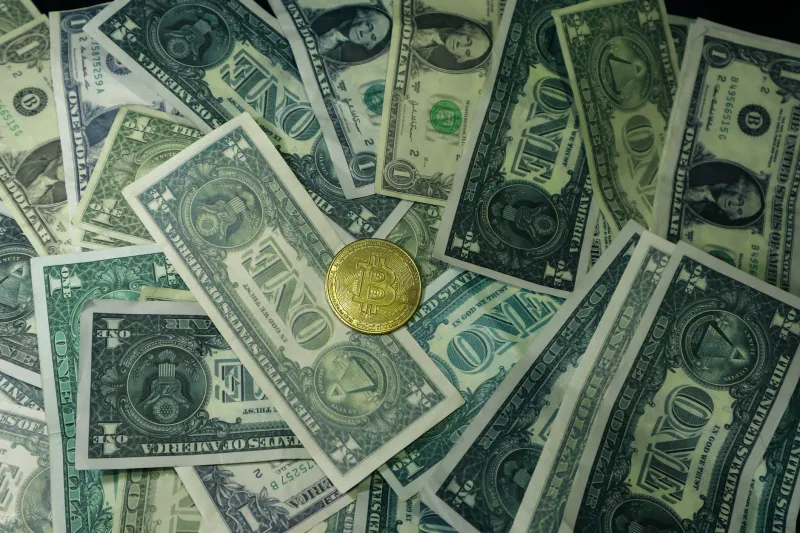
The term "stablecoin" implies a degree of uniformity that the market simply does not deliver. Behind the shared promise of a one-dollar peg lies a diverse and often opaque ecosystem of reserve structures, governance models, and regulatory postures. For US investors, understanding those differences has never been more consequential — or more urgent.
Federal regulators, Congressional committees, and state-level financial authorities are all advancing frameworks that will determine which stablecoin models survive the compliance transition and which face existential pressure. Investors who treat all dollar-pegged tokens as equivalent risk exposure are operating on an assumption the regulatory landscape is actively dismantling.
A Taxonomy of Stability: Three Models, Three Risk Profiles
Before evaluating individual projects, it is useful to establish a clear framework for the categories in play.
Fiat-Collateralized Stablecoins maintain reserves of actual US dollars, Treasury securities, or equivalent short-duration instruments. Each token in circulation is theoretically backed one-to-one by a corresponding real-world asset. USDC and Tether's USDT are the dominant examples. The primary risk here is not the peg mechanism itself but the quality, composition, and verifiability of the reserve.
Crypto-Collateralized Stablecoins use digital assets — typically overcollateralized to absorb price volatility — as their backing. MakerDAO's DAI is the most established example. These models eliminate reliance on traditional banking infrastructure but introduce smart contract risk and collateral liquidation dynamics that can behave unpredictably under market stress.
Algorithmic Stablecoins rely on supply-and-demand mechanics, often involving a paired governance or utility token, to maintain their peg without direct collateral backing. The catastrophic collapse of TerraUSD (UST) in May 2022 — which erased tens of billions of dollars in market value within days — has permanently altered how regulators and institutional investors view this category.
For most US retail investors, the relevant universe centers on fiat-collateralized models. That is also where regulatory attention is most concentrated.
Reserve Quality: The Metric That Separates Sustainable Projects from Vulnerable Ones
Not all fiat-collateralized reserves are created equal. The composition of what backs a stablecoin matters enormously — both for peg stability under redemption pressure and for regulatory acceptability.
USDS (formerly USDC), issued by Circle, has consistently maintained a reserve composition weighted toward short-duration US Treasury securities and cash held at regulated US financial institutions. Circle publishes monthly reserve attestations conducted by a major accounting firm and has pursued a posture of proactive regulatory engagement, including filing for a national trust bank charter.
Tether (USDT), the largest stablecoin by market capitalization, has historically maintained a more opaque reserve structure, at various points including commercial paper, secured loans, and other instruments that carry greater credit and liquidity risk than Treasury securities. While Tether has moved toward a higher proportion of T-bills in recent reporting periods, its attestation practices fall short of a full audit, and its offshore domicile creates additional complexity for US regulatory compliance.
For investors, this distinction is not merely academic. During periods of market stress, the speed and certainty with which a stablecoin can honor redemptions depends directly on whether its reserves are liquid, high-quality, and accessible. A reserve portfolio heavy in illiquid or credit-sensitive instruments can create redemption delays precisely when investors most need liquidity.
The Regulatory Trajectory: What 2024's Legislative Activity Signals
The US regulatory environment for stablecoins has moved from fragmented and reactive to increasingly structured. Several legislative and agency-level developments define the current landscape.
The Clarity for Payment Stablecoins Act, which advanced through the House Financial Services Committee in 2023 and continues to be refined in 2024, would establish a federal framework requiring stablecoin issuers to maintain one-to-one reserves in high-quality liquid assets, submit to regular audits, and obtain approval from either a federal banking regulator or a qualified state authority. Projects already meeting these standards are well-positioned; those relying on opaque or lower-quality reserves face significant compliance burdens.
The SEC's enforcement posture has signaled that certain stablecoins — particularly those with yield-bearing features or algorithmic mechanisms — may be subject to securities classification. This creates meaningful legal uncertainty for projects that blur the line between a payment instrument and an investment product.
State-level frameworks, particularly New York's BitLicense regime and its associated stablecoin guidance, continue to serve as a de facto compliance benchmark for issuers seeking credibility in the US market.
Treasury Management as a Signal of Long-Term Viability
Beyond reserve composition, how a stablecoin issuer manages its Treasury reveals much about its institutional maturity and long-term orientation.
Issuers that maintain reserves in segregated, bankruptcy-remote accounts — structured so that customer assets are protected even in the event of issuer insolvency — demonstrate a level of structural discipline that matters when evaluating counterparty risk. This architecture is a feature of well-regulated money market funds and is increasingly expected of stablecoin issuers by regulators and sophisticated institutional counterparties.
Issuers that commingle reserves, generate yield from reserve assets without transparent disclosure, or maintain reserves in jurisdictions that limit US regulatory oversight introduce risk factors that may not be visible in normal market conditions but become highly relevant during stress events.
Positioning for a Compliance-First Environment
For US investors incorporating stablecoins into a digital asset strategy — whether as a trading medium, a yield-generating instrument, or a portfolio stabilizer — the analytical framework must now include compliance trajectory as a primary variable.
Projects with the following characteristics are better positioned for the regulatory environment taking shape:
- Full reserve transparency through regular, independently attested or audited reserve reports
- Reserves composed primarily of US Treasury securities and insured bank deposits
- Segregated, bankruptcy-remote reserve structures
- Active engagement with US federal and state regulators, including pursuit of appropriate licensing
- Clear operational separation between the stablecoin function and any yield or investment products
Projects that lack these attributes are not necessarily fraudulent or imminently failing — but they carry a regulatory overhang that could materially affect their accessibility and utility in the US market as compliance requirements tighten.
The Axis View: Stability Is a Structural Claim, Not a Marketing One
At Axis Token, our analytical lens consistently returns to the same question: which projects are building for durability, and which are optimizing for short-term growth at the expense of structural integrity? In the stablecoin space, that question has never been easier to ask — or more important to answer honestly.
The dollar peg is a promise. What backs that promise — in terms of reserve quality, operational transparency, and regulatory posture — is the only meaningful measure of whether that promise is credible. As the US regulatory framework continues to crystallize, the distance between well-structured and poorly-structured stablecoin projects will only grow more consequential for investors holding them.